Mathematics
We are Mathematicians!
At Hassocks Infant School, we believe that becoming a confident mathematician is a fundamental skill that all children require to progress on their learning journey and into their adult lives. Our intent is to provide a mathematics curriculum that is meaningful, engaging and accessible for all children. We prioritise making maths make sense through practical, hands-on experiences and real-life contexts, supporting the development of essential life skills at this early stage. By fostering curiosity, problem-solving and enjoyment in learning, we aim to build children’s confidence and ensure a strong, secure foundation in mathematical understanding, preparing them for future learning and lifelong application.
Our Approach
We have been part of the Maths Mastery programme, by the National Centre for Excellence in the Teaching of Mathematics (NCETM) for over five years. This is an approach to teaching maths that focuses on developing a deep understanding of mathematical concepts. It emphasises a coherent and well-connected progression of learning, ensuring that students fully grasp each concept before moving on to the next.
This approach encourages students to explore and understand mathematical principles through problem-solving and critical thinking, building a solid foundation for future mathematical learning. We aim for our learners to develop a strong, confident and comprehensive understanding of mathematics through this mastery-based approach.
Teaching Tools
Fluency - Mastering Number
The Mastering Number program by the NCETM is designed to help students develop a deep and secure understanding of numbers and numerical concepts. It focusses on building a strong foundation in mathematical fluency, promoting a solid grasp of number relationships, patterns, and operations.
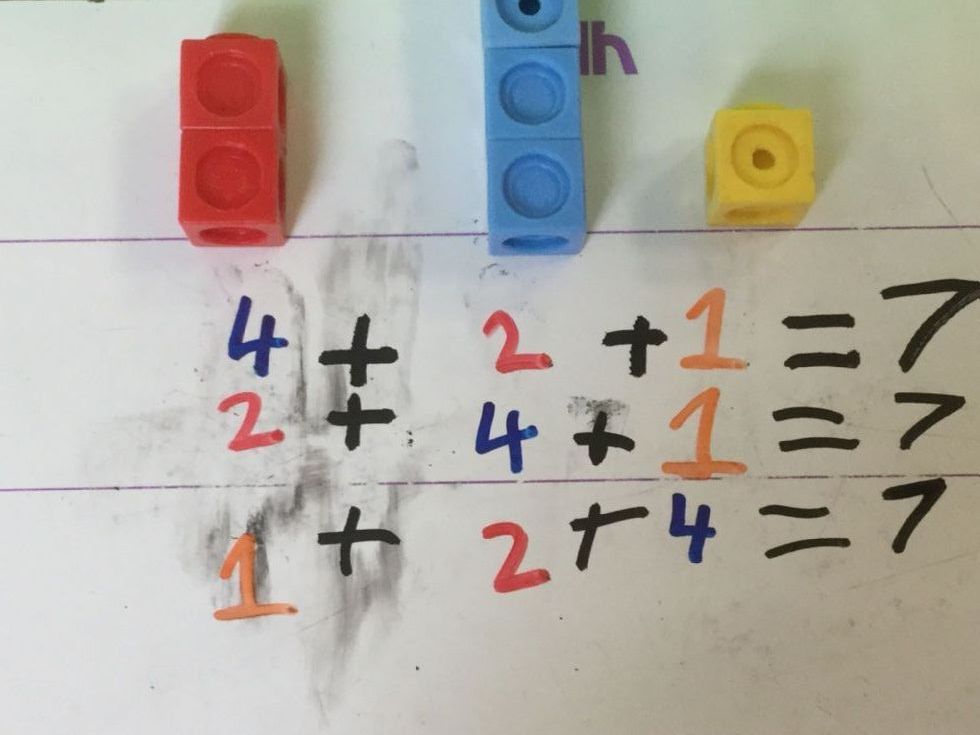
It uses engaging and relevant teaching tools, such as the Number Blocks, to help children to develop a secure understanding of the composition of a number. In Key Stage One, the children also use Rekenreks, which is a counting frame that enables children to use a concrete resource to support their calculations. Through these learning experiences, children gain confidence and proficiency in working with numbers.
Assessment
Teachers use a range of assessment tools to ensure they gain an overview of children’s maths abilities. During maths lessons, adults use planned questioning to elicit pupil’s understanding of concepts. This allows pupil voice to be collected, a valuable assessment tool.
Reception
In Reception, teachers use checkpoint assessments each half-term. These assessments are carried out with target pupils, who the teacher may feel require some additional support. These assessments involve up to 6 short activities, that are play based, linked to the half-termly learning covered during the Mastering Number sessions.
This helps the teachers to identify gaps and plan for interventions within the specific area required. These assessments are also used with children in Year 1 and 2 that are continuing to develop these foundations.
Key Stage One
In Key Stage One, teachers also use half-termly assessments. These require children to use recall to answer six questions, linked to the NCTEM units that have been taught over the past weeks. These are carried out with target children in a small group. The teachers use observational prompts to look for gaps in the children’s understanding and mathematical thinking. Each assessment links to our Key Performance Indicators (KPI). The teachers use these assessments to identify specific gaps in learning and plan targeted support.
Year 2 students may be asked to complete the maths SATS paper. This is carried out in an informal way and built into normal lesson times and results are only used to inform teacher judgements.
In Key Stage One, teachers use our Key Performance Indicators (KPI) to support their assessments. These were created alongside the Maths Hub, and are organised by each area of teaching.
Supporting All Children
Our maths sessions are designed to be accessible to all children and are taught as a whole class input. The teacher carefully considers ways to teach a concept in an inclusive way and uses different levels of questioning or follow-up tasks to support the understanding of individual learners. When a new mathematical concept is introduced, engaging in whole class discussions enables all children to benefit from the ideas and thoughts of their peers, creating a learning community. As the teacher has high expectations of all learners and provides lessons that are accessible to all, the children's self-esteem will grow, resulting in a positive view of maths.
Following a mastery approach to maths means we work towards children developing a deep understanding of maths concepts.
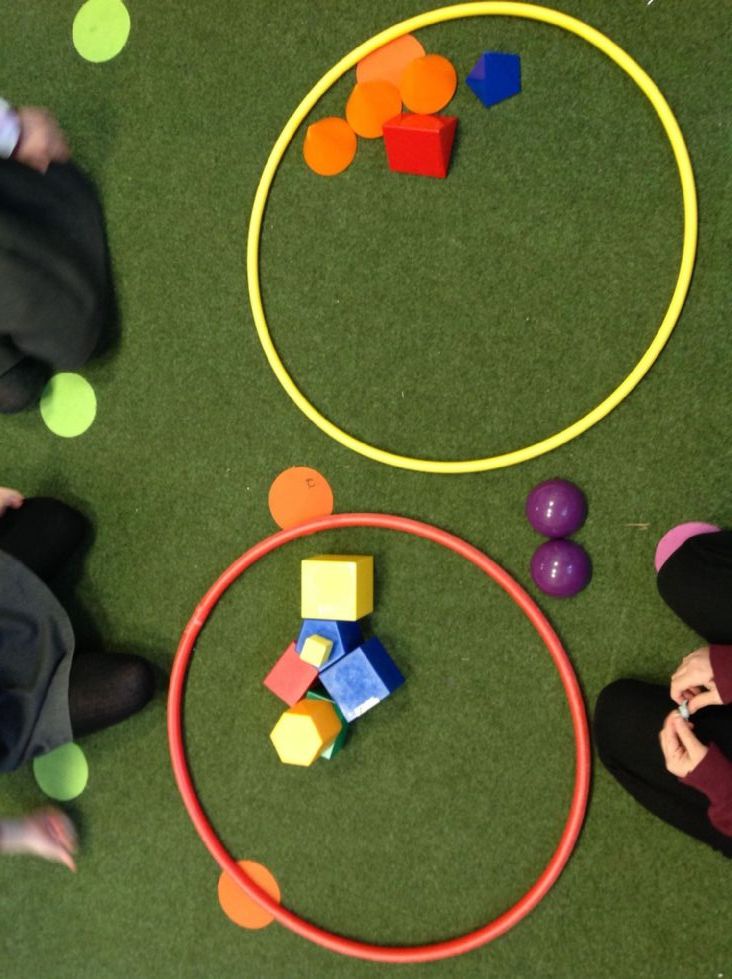
One of the key features of maths mastery is coherence. This means delivering lessons that are broken down into small, connected steps. This makes new concepts accessible to all children, as they develop generalisations which can be applied to a range of contexts. Lessons are delivered with carefully selected manipulatives, ensuring all children can use concrete resources, before moving onto pictorial and finally, abstract representations.
Teaching for mastery minimises children being taken out of the classroom and ensures all pupils learn together, and from one another. A mixture of mathematical language from pupils at various stages in their development helps lower-attaining children widen their vocabulary.
Above and Beyond
At Hassocks Infant School, we take part in the NSPCC Number Day bi-yearly. The children take part in different mathematical activities, with an overarching theme. This has varied from maths through art to becoming entrepreneurs. Most recently, the children were asked to raise money by creating and selling their own products. Each year group learnt about budgeting to buy resources and about selling their items for a profit!
During the Autumn Term of Reception, the children and their parents are invited to a maths workshop. This provides parents with an overview of the key areas of early maths and gives them the opportunity to see maths teaching in the classroom. The parents are provided with suggested activities to try out at home and have time to observe the class teacher modelling mathematical vocabulary.